Tuesday, January 18, 2011

The anthropologist and the mummy

The hieroglyphs on the walls of my tomb speak of how my spirit will accomplish eternal life, and all the tasks I need to perform before I can live forever. The writing praises the gods, describes my mighty battles, shows me with my wife and son, and outlines the curse against all who dare disturb my tomb. The curse is powerful and protects me against grave-robbers.

I thought the hieroglyphs took care of everything. They give my soul nourishment and instruction, they glorify my name and the name of the gods, and they protect my body and my possessions. I thought that was enough, but it wasn’t. Nothing could have prepared me for you.

When you entered my tomb, you were carrying a dazzling light. My spirit watched you and wondered how the light made no smoke. This was a strange, cold fire that formed your torch. You wore a headdress with a wide brim to protect your fair skin. You had beautiful, kohl-rimmed eyes and painted lips. Your skin was exposed to a point of scandal, but your comrades did not look askance at you. Your knees were showing, and your skin glistened with sweat in the heat. You exclaimed in your high voice over the beauty of my possessions, and it was then that I fell in love with you.

I felt the curse begin to take hold of your neck, and I hastily loosened its grasp. You went straight to my sarcophagus, ignoring that of my wife and son, and you laid your soft fingers gently on the gilded wood. A tingle shot through me at your touch. I loved you completely, already. I would let you do anything—take my possessions, remove my body to your world, anything—for your love.

The hieroglyphs on my walls do not protect my soul from love.

Thursday, January 13, 2011

Sachsenhausen Concentration Camp

It was brutally cold. I was wearing two pairs of pants, two sweaters, a coat, gloves, and two hats, and I was still shaking violently. The snow muffled everything. The mass graves were hidden from sight under a serene blanket of snow, which lay over everything like a crisp linen sheet, freshly ironed and bleached. There was no sun, but the day was bright from all the whiteness.

I was so cold, it was hard to listen to the tour guide. He said, “Ja?” a lot and told stories about the people who were imprisoned and died here. Horrific stories, like the man who was beaten bloody and then forced to strip and clean up his own blood with the rags of his clothing. I tried to imagine being imprisoned here and wearing nothing but a thin pajama-like outfit. I couldn’t. I shook in the cold and tried to tough it out, as if by standing for a couple hours in the cold I could somehow stand with the thousands of people who suffered here, an act of solidarity. If I couldn’t do it, in all the warm clothing I had, how could they stand in two-month-long death lines?

We reached Station Zed. It was only foundations now, but the building was easy enough to imagine. We saw the room where people were sent to be shot. We saw the gas chamber. We saw the incinerators. And then I closed my eyes and saw her.

Her face was gaunt, her hair thin and wispy. Dirty gray rags hung from her skeletal frame. She reached out to me, a gesture of supplication. Tears welled in her gray eyes. She gestured at me to come and join her. Gestured desperately. I opened my eyes and gasped, struggling for breath as if I had almost drowned.

I wanted to get away from this evil place, as fast as my feet would carry me.

Thursday, January 6, 2011

Heidelberg Castle

The fog was dense; we couldn’t see more than a few hundred meters in any direction. It had a silencing effect on the normal noise of the city; car horns and voices seemed muffled and far away in the fog.

We lazily sauntered alongside the river, watching a dog chase geese or pointing at the regal buildings that overlooked the shore. Great chunks of ice floated in the rushing waters, washed away to unknown distances, soon out of sight. Each step revealed more of the city across the river. A steeple materialized, then a statue, then a towering city gate.

We were walking across the Old Bridge when we realized something dark hovered in the fog above the city. We could barely make out its edges, jagged but clearly manmade with straight lines and arches. We realized we were looking at the castle. It floated serenely in the fog, tempting us to walk back in time through the mist.

Wednesday, November 10, 2010

Low tide


Her whole life was lived between high tide and low tide, moments of giggling grandeur and moments of sheer emptiness. She stood in the shell-pocked sand that would normally be underwater and looked across the sound to the island. There, at the island, people laughed. There, a man touched a woman’s arm, his glove whispering across her sleeve, whole books of communication in the touch, almost obscured by the wind. There, a girl tugged the sleeve of her mother, and the woman’s hazel eyes fell with a smile on the face of her daughter. There was where people belonged.

She was barefoot; her toes slipped on the fungus that blanketed the shells like moss. How many creatures was she killing just by existing, by standing on the shore? A seagull lighted on the sand just out of the water and began to search for food. It was merely a silhouette in the gloaming. Was that all she was, just a being in search of sustenance? But no, seagulls culled the population of their prey, didn’t they, served a purpose. She had no purpose, except to stand on the shore and wonder about the people on the faraway island.

She stretched her arms wide. Her loneliness could not be contained in the gesture. She shut her eyes as tight as they could close. She screamed silently, her mouth agape in a perfect O.

Wednesday, November 3, 2010

The mansion


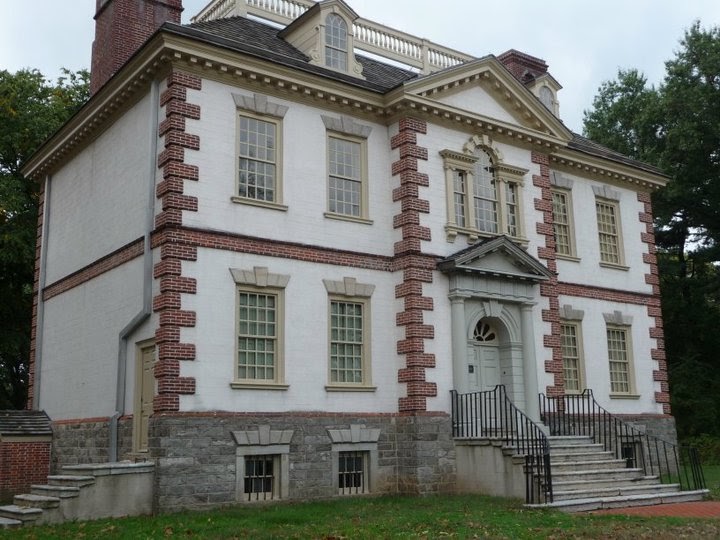
They call it Mount Pleasant, but to Joseph, it’s anything but pleasant. The stifling heat of the outbuildings, the occasional beatings, the hands rubbed raw from hours of scrubbing, none of it is in the way of pleasant. The whites call it the Grand Dame of the houses in the area, something about how pretty the house is, a mixture of Scottish and Georgian style, he overhears. But no Grand Dame harbors such wanton cruelty in her house. Surely not.

The people who hold the tours never talk about Joseph, hardly mention the slaves that live in this house. Joseph resents being ignored, forgotten. No one remembers them this far north of the Mason-Dixon Line. Oh, he’s heard the abolitionists, after his time, talk in these halls. He’s heard the modern folk talk idly about how terrible slavery was, before moving on to exhort the lovely architecture or the mysterious door that goes nowhere, set in the wall just for symmetry.

But when it gets dark and the tours are all done and the shutters have been secured against the night, Joseph makes sure the Grand Dame remembers her past. He waits until the uniformed people check the halls with flashlights at intervals; then he sends things crashing through the upstairs hallway, and he remembers the sound of a scream, a footstep, a fallen pot of soup for which he is beaten.

The security guards refuse to face Joseph alone. They either neglect their duty to check the building at night, or they come in pairs, never venturing upstairs, even if they see a light on. They, at least, know the Grand Dame’s secrets. Joseph lives to make sure someone remembers. Joseph is of his time, and this time, and all times. Joseph is past, present, and future. Joseph is here, always.

Thursday, October 21, 2010

Social agoraphobia


In my shell, I lay silent, striving to make even my heartbeat faint. But I must come out sometimes. When I do, it’s claws first. My eyes blink rapidly in the sudden brightness, and my arms tremble. The world does not understand my kind. My world is filled with people chatting happily away, never knowing how much I need to hide away in my shell. When I see the funny guy across the way, my heart seizes up. My eyes dart this way and that, searching desperately for a way to change my route so I don’t have to walk past him and laugh at his jokes.

When I finally get a glimpse of a life I think I want, it’s out of reach. I hate myself for making it so impossible to attain. The first step would be easy, invited even. But I think ahead; the next ten million steps would be torturous and unsafe. The people around me are all crabs. But I have invested so much in them. Can I really crawl out of this shell? Self-doubt consumes me. I don't know what I want.

I draw deep within my shell. I have to think about this.

Thursday, September 30, 2010

The grape


There was a pleasant, chilly bite in the October breeze, sharply contrasted with the warmth of the citrine late-afternoon sun. It hadn’t rained in more than a week; the grass was brittle and crispy beneath my shoes. I held a grape in my hand. The iris sphere was dusty with pesticide and slightly wrinkled from being clutched like a talisman as I ambled through the vineyard. It was fat and squashed. I regretted finding it after its prime. This one perfect grape had been missed in the harvest, seemingly alone.

I imagined putting it in my mouth; I would burst the tender skin with my teeth, allow the juice to spill over my tongue, not chewing until I felt I might drown. It would be slightly bitter, and the taste would remind me of my grandmother’s cooking. I would dream that night of her, tell her about the grape, and wake in the morning convinced I had spoken to her actual spirit. I would tell no one, but fervently search for the next encounter. I would fail to keep appointments in favor of traveling from one distant restaurant or farm to another, trying to find foods that tasted like hers. I would lose my job and eventually my friends, having succumbed to obsession in finding taste memories to prompt spirit dreams. I would eat through my savings; I would be reduced to begging on the streets and hoping for a sign of her in soup lines.

I buried the grape in the dusty soil at the base of the barn. My fingernails bore a faint purple stain, the only evidence of my barely escaped future. Something so powerful and dangerous should never be eaten.

Tuesday, September 7, 2010

Love story


You began to follow her because she intrigued you. She was full of elegant contradictions. She always told people what she thought, but she valued respect. She was a rebel, but she played by the rules. She was wildly emotional, but she schooled her face to enigmatic impassivity. She was quiet, funny… shy when you met her, outgoing among friends. She was smart, ambitious, obsessive, a little crazy. She was as tender as a butterfly, as tough as stone.

You curled your tail around her legs and ensnared her. You entwined the threads of your life around her, tied them to her. Your heart rejoiced with the knowledge that you had caught her, made her yours. Her edges met yours like the continents of Pangæa coming together for the first time in two hundred and fifty million years. Your world sang with rightness.

As time passed, though, you discovered her edges to be sharp. Her blunt nature became less engaging, more difficult to tolerate. She demanded too much respect, too much correctness. Her mood swings were baffling and unpredictable. Her silence seethed; her jokes fell flat. She held you back socially with her shyness and craziness. You feared she looked down on you because she was smart, ambitious, obsessive. You longed to rip off her butterfly wings and watch her scream in agony. You ached to carve the steel from her eyes.

Quietly at first, then with increasing rage, you began to cut the threads. You had forgotten why you were here. Your guttural yell shredded your throat as you pushed her off the cliff. You stood with your hands on your hips, your lips pursed grimly, and watched with satisfaction as she fell and fell and fell.

Friday, August 6, 2010

Things to do at a concert

I grinned and elbowed a girl who was jumping up and down and throwing out her hands. She happily pushed me back. My face smeared across a slick shoulder; both were so covered in sweat, I immediately slid off. I lost my balance and teetered dangerously, but there were too many bodies between me and the floor for me to actually reach it. The owner of the wet shoulder grabbed my arm and righted me. He grinned. He was missing a canine. His septum piercing glinted in the indirect red-and-blue stage lights.

He was bulky and nearly a head taller than most of the others around. I gestured, pointing to the ceiling. “You mind?” I had to scream into his ear to be heard over the Celtic punk music, which was so loud the wooden floors vibrated.

He looked at me appraisingly. Probably guessing how much I weighed. “All right,” he shouted. “Come on.” He tapped the shoulder of another big guy and pointed at me, then pointed at the ceiling.

I checked my hair. It was lopsided and straggling out of its bun, but not yet completely loose. My newfound friend cupped his hands and I stepped as gently as I could into them. The other guy steadied me by grabbing my thigh.

“One…” he counted, hoisting me and lowering me instantly. “Two… Three!”

With a huge heave, I was flung over the crowd by one foot. People’s heads slammed into my ribcage. With one hand, I held my pants pocket, which contained a wad of cash and my cell phone. With the other, I reached out to try to spread my weight across other people.

Soon people realized there was a crowd surfer nearby. They threw up their hands and grabbed whatever part of me that threatened to crack their skulls. I did my part; I kept my feet elevated so I didn’t smack someone in the face with my shoes. My body heaved in time with the music, held up by a dozen people.

I surged forward and tipped over the front, just before the stage. A beefy security guard caught me and lowered me to the ground. Here, the music was a solid thing; it pushed me back. The security guard pointed me in the direction he wanted me to go. I looked up at the bass player, whose foot was near my head, and smiled. I turned and jogged back to fight my way back through the crowd and do it all over again. From my chest bubbled a strange noise, a hysterical screaming laugh from the thrill of a great show.

Thursday, July 29, 2010

Cutting grass


It’s the headstones he can’t read that bother Jimmy. Uncle Rick started preaching at the Lutheran church before he was born, so Jimmy’s used to the cemetery. Mostly. He’s been mowing the church grounds since he turned twelve. An exhilarating prospect, it seemed, the ability to operate machinery without any grown-ups looking over his shoulder. Uncle Rick and Aunt Eliza never give him any peace at anything else. It’s always wash your hands or help can these pickles or have you finished your homework? He wonders if his parents were like that when they were still alive, but he can’t remember.

He drags the mower from the shed. He pulls a cord, and the mower starts with a wheezy cough. It would be better if he had a riding mower, he thinks as he begins his circuit of the churchyard. If he did, he wouldn’t feel the chill of walking over someone’s grave. With his parents’ graves, he stands to the side and pushes the mower way over, bending his body in a funny arc to avoid stepping on them. But he can’t do it like that for every plot; it’d take all weekend to mow.

No, other than his parents, Jimmy walks all over the dead every Saturday. Ordinarily it’s no big deal. The somber, shiny headstones don’t seem to mind, and the big fancy pillars almost seem to like having the unruly grass tamed and in order. But a few of the really old ones, the thin flaking slabs with indiscernible markings on them, the ones that encourage dead-looking weeds to flower and bloom nearby, those don’t like it at all. A chill shoots through his heel, up his leg, and grips his heart with icy fingers each time he walks on one of those.

His friend Bo says it’s because witches are buried in the ancient graves. Jimmy doesn’t think that’s right. Weren’t witches forbidden from hallowed ground? Something like that. Thinking of Bo makes him suddenly appear, as usual, and Jimmy lets the mower die. Locust song rises to fill the silence.

“Ho, Bo,” he says, grinning.

Bo waves and stuffs his hands in his overall pockets. He is chewing a piece of wheat, even though there are no wheat fields in town anymore. Not since—Jimmy screws up his face, trying to remember what Ms. Taylor said in a history lesson—not since the Depression or some crazy long time ago. It’s all about corn anymore.

“Whatcha doin’, Jimmy?” Bo asks amiably. He is a simple boy, who would be in special ed classes if he went to school, which he doesn’t. Now he thinks about it, Jimmy is sure he’s never run into Bo outside the churchyard. Bo always asks questions to which the answer seems ridiculously obvious.

“Mowin’,” Jimmy replies. “The old ’uns are angry today. They been grabbin’ my heartstrings something fierce.” He likes that word - heartstrings. He imagines his heart tied up with loose shoelaces when he says it.

Bo nods wisely and squints toward the older section of graves. “They ain’t happy with you,” he says. “They figured with all the racket you make you’d take the time to figure out who they is.”

Jimmy frowns. He is never sure if he should respond to Bo’s fantasy world, or just stay quiet. “I dunno,” he says finally, “how they expect me to do that. Not like there’s a map. All the records got destroyed in a fire before I was born.”

“Pah!” says Bo. “You talk to ’em, of course. You talk to me, don’t you?”

He saunters away without waiting for an answer. By the time Jimmy has thought of something to say to that, Bo has disappeared behind a tree. He shakes his head. Bo is always appearing and vanishing. He’s a strange boy and he never knows how to end conversations politely.

Jimmy starts up the mower again. The other grave he doesn’t walk on is a tiny square on the ground. It has the name Bo Morley on it, 1906. He thinks it’s cool that someone in 1906 had the same name as his friend. He leans way, way over and pushes the machine in front.

Thursday, July 15, 2010

Sunset on the mountain


Donald tried to ignore the burning in his thighs as he trudged up the mountain. The man ahead of him was using his sword as a walking-stick. Dust and dirt caked the warped blade, but at least there was no mud. It hadn’t rained in weeks.

Donald had strapped his gun to his back; he’d sold his sword for flour months ago. The gun chafed under the itchy, unwashed wool of his plaid. He snatched a loose end of his tartan and mopped his face with it; he was dripping with sweat. Back home, dusk fell quickly. Home… he felt a pang to think of Mary and the bairns. But here, in these unfamiliar, bug-swarmed mountains, dusk took its time. Or maybe he just felt that way because of the intolerable heat and the march through rhododendron hell. He wondered if it was this miserable in the Indies. Some of his clan had ended up in those islands. He doubted he’d ever see them again.

He shook himself. He always got like this after a long day of marching. He always brooded on what they were up against, and the cruel knowledge that he’d narrowly escaped death in one war only to march directly toward it again. You’re only tired, he told himself sternly. Just hungry and tired.

Thankfully, it looked like the column had stalled ahead. Were they finally to make camp atop this ghastly mountain? He reached the rocky precipice and couldn’t help but gasp. The bloodstain of sunset had crept across the sky and was reflecting off the granite of the mountain in a thousand shades of pink and amaranth. It filtered through the thin green leaves of the rhododendrons; they were suddenly laden with fruits of carmine and vermilion light. As he drank in the beauty of the land, the pipers filled their bellows and slowly took up a haunting song. The melody fell on the air and soared up the mountain. Donald closed his eyes against it all, and wept.

Wednesday, June 23, 2010

Home is where the fire is


It was a chilly night, the kind autumn sends to make sure you remember it has arrived. Brendan showed up late to the party. He hung back a moment, unsure of himself. A small fire crackled in an iron pit on the patio; people clutched plastic cups and laughed manically at jokes that weren’t all that funny. The men wore fedoras and artfully torn jeans, the women tank tops or skirts; they all shivered or rubbed their hands vigorously, having chosen to underdress and be stylish rather than warm.

He walked up to the patio; he made it all the way to the steps before anyone realized someone new had arrived. A chorus of loud greetings assaulted him. He smiled wordlessly. He hadn’t seen most of these people since high school.

The hostess, an old friend, appeared from inside the house carrying a camera in one hand and a drink in the other. “Brendan!” she shrieked, nearly dropping both items as she raised her arms to hug him. He had never understood why some people feel the need to start and end every encounter with a hug, but he complied. “Ooooh,” she said pulling back and winking at him. “What’s that I felt in your pocket?”

He pulled out his two staves. “I spin fire these days, remember?” he said. “I was told you wanted me to spin tonight.”

“Oh, will you, please?” she said, batting her eyelashes. He smiled again, a little charmed despite himself.

He had no idea why he was here. He was starting to feel like it was a mistake as he accepted an apricot beer from someone he didn’t know. This wasn’t his crowd. He’d moved out of state right after school because he’d never felt like this was home. But his cousin had talked him into the party. These people were talking politics. These people were worried about their weight. These people had children. None of them had ever seen anyone spin fire, or any of the other things he could do.

He finished his beer, stepped into the modest yard, and began arranging his things. The moment the poi were alight, he felt more at ease. Out here, he couldn’t see the faces of the other party-goers. They fell mostly silent, though occasionally they yelled at him good-naturedly. He started to spin, slowly at first, but gradually gaining speed and complexity. Just like always, a dozen camera bulbs began to flash. He was home, after all.

Friday, June 4, 2010

Outcast


Glaring at the post, Blikkerd morosely rubbed his sore tooth. Those jerks would get it one day, he thought, pounding one green fist into the other with a satisfying fleshy smack. Oh sure, they could point and laugh now, but Blikkerd was certain that he’d hit his growth spurt one day and grow three times bigger. Then he’d finally stand nose-to-nose with the ogre bullies, those arrogant debonair dudes who had all the girls falling over themselves for attention. Then he’d be the one tying people to posts by their teeth and winning misty-eyed female gazes.

Surely he couldn’t remain a shrimp forever.

He kicked a tree trunk in anger; its bark split a few inches. He roared in frustration. If any other ogre had kicked a tree, it would have fallen with a magnificent crash. A squirrel sat in high up the tree, skritching away at a walnut and eyeing him curiously. He roared again. The squirrel barked back at him and stuck out its tongue.

Blikkerd sighed heavily and walked on through the woods. It would be days before he could show his face back in the caves. No one would soon forget his flailing arms and unmanly shrieks when they’d tied him to the post. No, he’d need to let that effect wear off before returning home.

Feeling rather lonely, he walked for hours, barely noticing where his feet led him. As it grew dark, he started to look for a glade where he could sleep. He was NOT afraid of the dark, not at all. He had a severe allergy to darkness, was all, and the only cure, unfortunately, was sleeping near others. It was not going to be a good night, spent all alone.

He stumbled through a thick patch of fragrant pine and stopped dead at what he saw. In the clearing there lay sleeping three beautiful faeries. Their skin glimmered like snow in the late evening sunshine; their diaphanous wings caught the light and reflected prisms of color. Their lunch, clearly stolen from humans in the nearby village, lay snugged by the nearest faery. But most beautiful of all, an ogre slept against a tree, part of their little group. The ogre was ridiculously small… barely bigger than Blikkerd himself.

Blikkerd could hardly contain the feeling of hope that set his heart to hammering. He crept into the circle and settled against a tree across from the other ogre. He would wait until they awoke. Maybe, just maybe, they wouldn’t tie his teeth to a post when they discovered him.

Nest


Spring cleaning fever set upon me in early March. Something about chartreuse buds peeking from behind the russet film of winter triggers an innate need to tidy our human nests. I scrubbed, I donated, I reorganized and folded. I turned my gaze to my little lawn, where my wrath fell upon the blight embodied by a giant rusted satellite dish.

I had no idea how to get rid of the thing myself; it was far too large and I hadn’t the proper tools to dig it up. So I posted an ad online. “Free to the first taker: scrap metal in the form of old satellite dish. Must remove it personally.” Within hours I had four replies and wondered if I should have charged people for the service. I arranged for someone to remove it while I was away from the house.

When I got home, I strode purposefully to the spot where the satellite dish had once darkened my yard. A deep hole was the only indication it had ever been there… except for a bird’s nest. Tiny naked creatures with yellow bills and bits of brown fuzz filled the nest. Anguish rose in my chest. I hadn’t even considered the time of year, the likelihood that a bird might choose the satellite dish as a safe place to lay her eggs.

I tried to leave the nest alone to entice the mother back. But when it became clear the mother wouldn’t (or couldn’t) return to the disturbed nest, I dug worms and tried to feed the birds. I fed them sugar water. I frantically telephoned animal rescue outfits within a hundred-mile radius; they all told me there was no chance of saving birds so young.

Days later, all options exhausted, my husband put the dying creatures out of their misery, tears streaming down his face. After burying the tiny bodies, we held each other, shoulders shaking, gazing at the nest and wondering why the stupid satellite dish couldn’t have waited another month.

Monday, May 24, 2010

Tarpon


It was seven o’clock in the morning. We’d awoken in the dark before dawn and hastily eaten stale toast with funny-tasting peanut butter for protein. Then we’d assembled our gear in the sandy bed of the truck and grilled each other to ensure nothing was forgotten. We piled into the truck and left as the sun began to stain the clouds orange.

Like every other morning, it was cool and windy when we arrived at the dive site. The clouds were low and heavy. They promised rain, but we knew by now that the rain would not come. So, threatening skies notwithstanding, we donned our gear and waded through the surf, sometimes clutching each other for support as the waves lapped our legs and threatened to topple us with all our heavy gear on our backs. Once we were far enough out, we pulled on our fins and, with a last wide smile at each other, dove.

The reef was bare here, and the visibility was less than ideal. Some days, one could see the sunken ship almost from the shore. This morning, though, its massive hull slowly materialized before us only when we were quite near. There were no other divers this early in the morning; we had the wreck to ourselves. We explored her from bow to stern. Coral adorned every surface like jewelry on a fat old lady.

As the others explored the deck, I hovered out in front, following their progress by watching their bubbles. I turned and scanned the deep blue behind me. Just as I was about to turn back, I realized a long, slender shape was emerging from the gloom.

My heart hammered in my chest. I could feel my excitement mounting, and I carefully regulated my breathing so as not to use my air any faster than usual. Was this it? I’d hoped and hoped to see a shark. A diver had mentioned to me over dinner the night before that he’d seen a gray reef shark near this site, and of course early morning was a good time to spot one.

The silver, torpedo-like shape floated serenely nearer, barely moving a fin. Gradually, the mouth became clear, and the wide silver scales. My heart sank. Just a tarpon. He was nearly as big as I was and held the cold, calculating air of a predator, but a shark he was not. He regarded me with cool interest. I lifted my camera. Even if he wasn’t a shark, it wasn’t a bad start to the day at all.

The others emerged from their exploring and the tarpon, seeing the divers, moved away. My moment with him was over.