The prince shoved me into the carriage and followed me inside. Baba trailed behind him, calling for payment. He slammed the door in her face and called for the driver to whip up the horses. The carriage lurched into motion, and I clung to my seat to avoid being rocked onto the prince. With Baba gone, I relaxed a little. I didn’t know what the prince was capable of, not yet, but I knew only Baba could turn people into birds.
We both remained silent for the carriage ride up to the castle. When we halted, the prince grabbed my arm again and yanked me outside. I ran to keep up with my dragged arm, stumbling twice. The prince led me through the castle gate, flanked by liveried servants, and into the building. The high ceiling dwarfed me, and I felt myself shrinking at the shoulders.
He led me down hallways, up spiral staircases, through grand rooms, and up more stairs. Left, right, left, right, right, up, over, left, through... I became completely lost. As my breath began to come more raggedly, he finally halted before a large wooden door and opened it. “Your quarters, wife,” he said.
An icy chill ran down my spine at the word, but I gave a half-bow and entered the room he indicated. As I was staring at the furnishings and trying to take in my new surroundings, the door shut behind me. I heard the sliver of a steel lock slide into place outside the door.
I waited for hours. I paced the room, treading on the thin rug and cold tile floor without noticing their grandeur. Someone sent up food when the light in the window grew orange. I gobbled down the warm stew hungrily and waited for full dark to descend outside the window that overlooked the steep forest below.
When darkness fell, no one came to light my fire. I took that as a sign that no one would be wandering the corridors. I knelt by the door and pressed my lips to the keyhole. I had learned a few tricks from being Baba’s slave. I whispered the sacred words, and I heard the lock slide away. I turned the handle. The door opened without resistance. I crept into the hallway and shut the door behind me, panting softly. I had to escape.
I went down the hallway and took my first left turn, then the last hall on the right, then through a dark dining room, and down some stairs. I walked to the third door on the right and opened it. A cupboard. I felt my panic rising. I was lost and I couldn’t get out even if I didn’t get caught.
I wandered the halls for hours, growing increasingly frustrated as I tried and failed to get out of the castle. On my eighteenth failure, I sank to my knees and wept softly.
It was then I heard it. The call of a thousand birds.
TO BE CONTINUED...
Friday, October 7, 2011
Thursday, September 8, 2011
Hummingbird, part one
I stared at the white expanse outside my window. The glass was smudged, fogged... but it didn’t matter because there was nothing to see out there but snow. This was the first carriage I had ever been in that had a glass window. I wasn’t thrilled about it; it let in the cold. Suddenly the horses stopped; I threw out my arms to prevent myself from toppling to the floor.
“It’s time,” said Baba.
She reached out; I flinched away from her. She slapped my arm with one hooked hand; the sting was sharp and immediate. She pinched my cheeks. “Nice and rosy,” she said. Her voice turned dark. “You know what will happen if the prince doesn’t fancy you.”
“Yes, madam,” I said meekly. I felt my options slipping out from beneath me; soon I would be as a castaway, clutching an ice floe and treading frigid water. Baba had sworn to turn me into a hummingbird if the prince didn’t select me. I believed her.
I pulled up my hood to cover my red hair and opened the carriage door. The driver was standing outside; he held out his arm to help me down. I caught his eye and begged him silently, with my gaze, to help me. If he understood, he ignored me.
I straightened my dress and looked up. My breath caught. The castle was perched on the mountain straight ahead. It looked straight out of a fairy tale. But it looked desolate, unreachable, cold and drafty. I shivered.
A man hurried up to me. He stood only as high as my waist and had bluish skin, as if he were made of ice. He pressed a cup into my hands. I sipped tentatively and sighed. Hot glühwein. It warmed my spirits.
The little blue man suddenly prostrated himself on the snowy road as a very tall man with black hair approached. He wore a golden ring on every finger; this must be the prince. I curtseyed.
The man spoke in a cold voice. “What is this you have brought me, Baba?”
“Your future wife, your highness,” Baba said. “She is timid and pretty and knows how to cook.”
“What need have I for a cook? I have three already.”
“She comes from good stock,” Baba said, ignoring the prince. “But her family are all deceased, so none will pester you.”
The prince considered me for the first time. I withered under his gaze. I stared at the ground as Baba continued to wheedle, but her voice fell on my ears as random noise. I was so afraid, my hand shook out some of the glühwein from my cup. It fell on the snow like a splash of red, red blood.
Abruptly the prince grabbed my arm. Roughly. I gasped and dropped the cup. The prince paid no mind and steered me into a gilt carriage that was waiting nearby. I should have been listening more carefully. What had he decided? Was I to be transformed, turned into another bird for his collection? Or was I to be enslaved as his wife?
And which was worse?
TO BE CONTINUED...
Tuesday, July 19, 2011
The nickel
Sometimes I think back over my many short years and they flash before me like a butterfly, vivid yet fleeting. But they always slide away like a dewdrop in the morning heat. The doctors tell me I’ll live among my memories soon enough, that I will no longer have a present except in my past. Sometimes I don’t believe them. How can such a strong man ever become so hopelessly lost in his own brain? But other times, I think of the liquid nature of my memories, how they slip away like molten glass, and I sink into pure terror.
I don’t want to live in a jungle of confusion. I don’t want to hurt my sons, not remembering their names. I don’t want to forget my grandchildren’s cherubic faces. I am afraid. And yet the one thing I want most to remember is slipping away fastest, because I have never told anyone. Will you remember it for me, when I have fallen into nonbeing?
When I was a pilot in the war, Jeremy and I were inseparable. He had blazing red hair and freckles and was not a day older than eighteen. We passed a nickel back and forth between us, each day. It was a token of being alive. Sometimes the only time we saw each other was in the mess hall, when we would pass the nickel for another day. He’d smile as the nickel changed hands. “Can’t believe you made it outta that one,” he’d say, and thump my shoulder three times.
Jeremy shaved my eyebrows one night as I slept. We had been off duty and celebrating our last day of freedom before returning to the war. I had gotten a little drunk, homesick for the pretty young bride I barely knew back home, so I never woke as Jeremy shaved both my eyebrows clean off my forehead.
Well, there was nothing to do but retaliate when I found my brows hairless and strange in the morning. I found Jeremy’s helmet and filled it with shaving cream. He was suiting up as he passed me the nickel. “You carry it today, naked-eyes,” he said.
I pocketed the nickel and watched with a smirk as he climbed up into his helicopter. He didn’t put on his helmet until he was in the air. Over the microphone, I heard him mutter, “You son of a—”
The helicopter exploded. Shot down by the enemy. The grin faded from my lips as I clutched the nickel in my pocket. I didn’t even duck from the debris flying everywhere. I just held on to that nickel as tightly as I could. I just knew Jeremy could come back if I held on to that nickel.
I still have the nickel, after all these years. The memory slips away from me like dew on a crisp golden apple on a warm autumn morning, and in some ways, I am happy to see it go. One day, it will just be a nickel. I hope someone holds on to it for me.
Saturday, June 11, 2011
In the rosebush
Lynxie didn’t bother building webs. Spiders who built webs relied on stupid creatures to blunder into them. No, it was far better to be clever and trick one’s prey into coming near enough to pounce.
It was high noon, and she was admiring the way her perfectly green skin matched the color of the leaves on the rosebush when she saw it. A fat black fly was preening its wings on a nearby rosebud. All eight of her legs tensed with anticipation. She hadn’t eaten in a few days and was starting to feel weak. She needed this meal.
“Hello, fly,” she called.
The fly froze, one leg hovering over its translucent wing. Its many eyes looked frantically for the source of the call, but she was too well camouflaged for it to make her out.
“You’re looking very black and shiny today,” she said serenely.
The fly lowered its leg slowly and fluttered its wings.
“You must be king of all the flies,” she crooned, “with your shimmering eyes and vibrant wings.”
The fly puffed out its abdomen proudly.
“But why,” she asked, a note of eloquent sorrow in her voice, “why do you sit on that browning rosebud? That cherry perch detracts from your beauty. Nay, green would suit you far better.”
The fly glanced down and considered the petal beneath its sticky feet. It inched toward a leaf, toward Lynxie. She sunk onto her legs, ready. “The king of the flies deserves a better throne,” she said softly. “A nice verdant leaf is what you need.”
The fly lit into the air and hovered for a moment, deciding. She followed it with her shrewd eyes; she held absolutely still on the leaf. The fly circled, and then landed on a particularly luxuriant leaf.
She pounced.
Tuesday, March 29, 2011
Pot of gold for two
“The sprite came through here,” Kardent said. He pointed at the snow. “See? He tried to disguise his tracks as hare footprints.”
“I don’t know,” Galla said dubiously. “Looks like bunny tracks to me. If that.”
Kardent rolled his eyes. “That’s the point, innit?” He set off after the tracks, and Galla had no choice but to follow, lifting her skirts to keep the snow off them. Kardent kept stopping and sniffing the air, as if he could smell a creature that stood no higher than his knees. Once he even stripped some bark off a birch and licked it. She was pretty sure that was for show. Aye, he had no idea what he was doing and was lucky it had snowed so at least he had tracks to follow.
Suddenly, he stopped and pointed to a scrubby jumble of branches and leaves and said, “He’s in there.”
Startled, Galla peered at the burrow. “You sure?”
“Sure as a tax man,” he said firmly.
She frowned. “How do we get him out?”
Kardent didn’t reply. He pulled his tinderbox out of his tunic and struck his flint behind the burrow. It was damp, so it kept going out, but he was persistent, and eventually it was aflame.
They waited.
And then the sprite leapt out of the burning burrow and into Kardent’s waiting arms. He struggled, kicking and biting and flailing like an angry cat. He had flaming red hair and a scrunched-up nose. “What’re ye doing tae me home, ye filthy buggers?” he screeched.
“We’ve caught you,” Galla said serenely. “Fair as pie. We want the gold.”
The sprite stared up at her, his big green eyes comically round. “There’s nae gold here, ye dunderhead,” he squeaked. “Ye don’t see any rainbow, now, do ye?”
Galla looked around. “No, but we want the gold anyhow.”
The sprite laughed. “You burned my house, ye blaggards! There’ll be no gold for you, not now, not ever!”
The air shimmered around the sprite, and, though Kardent visibly tightened his grip on the creature, the sprite transformed into a hare and wriggled out of his captor’s arms. He bounded away, white tail twitching indignantly.
“Ugh,” Galla said. “Now we have to start all over again.”
Thursday, February 24, 2011
Alone
I sit on the bench and, shivering, wrap my shawl tightly around my shoulders. It is a fall morning, cold and crisp like a chilled apple, and every breath plunges into my lungs like icy water into a swimmer’s mouth. But the colors are lovely; the tree line across the barren field is beginning to show splashes of crimson and gold amid the dark greens and browns. The sky is a solid azure, the color a sky should be, the color it rarely is.
I am waiting… for nothing. I sit here with no purpose. I don’t watch people as they jog by with huffing breath, and I don’t expect anyone to join me on my hard bench. I don’t enjoy the weather or the scenery. I merely sit. I am here to be alone, and that is all.
It has been a long time since I found company. I have been lonely, surrounded by friends and family, screaming silently in an earless crowd. But now, as a flock of geese rushes above my head, honking and beating the air with powerful wings, I find my company. Alone. I take a deep, cold breath and slowly close my eyes.
Tuesday, January 18, 2011
The anthropologist and the mummy
The hieroglyphs on the walls of my tomb speak of how my spirit will accomplish eternal life, and all the tasks I need to perform before I can live forever. The writing praises the gods, describes my mighty battles, shows me with my wife and son, and outlines the curse against all who dare disturb my tomb. The curse is powerful and protects me against grave-robbers.
I thought the hieroglyphs took care of everything. They give my soul nourishment and instruction, they glorify my name and the name of the gods, and they protect my body and my possessions. I thought that was enough, but it wasn’t. Nothing could have prepared me for you.
When you entered my tomb, you were carrying a dazzling light. My spirit watched you and wondered how the light made no smoke. This was a strange, cold fire that formed your torch. You wore a headdress with a wide brim to protect your fair skin. You had beautiful, kohl-rimmed eyes and painted lips. Your skin was exposed to a point of scandal, but your comrades did not look askance at you. Your knees were showing, and your skin glistened with sweat in the heat. You exclaimed in your high voice over the beauty of my possessions, and it was then that I fell in love with you.
I felt the curse begin to take hold of your neck, and I hastily loosened its grasp. You went straight to my sarcophagus, ignoring that of my wife and son, and you laid your soft fingers gently on the gilded wood. A tingle shot through me at your touch. I loved you completely, already. I would let you do anything—take my possessions, remove my body to your world, anything—for your love.
I thought the hieroglyphs took care of everything. They give my soul nourishment and instruction, they glorify my name and the name of the gods, and they protect my body and my possessions. I thought that was enough, but it wasn’t. Nothing could have prepared me for you.
When you entered my tomb, you were carrying a dazzling light. My spirit watched you and wondered how the light made no smoke. This was a strange, cold fire that formed your torch. You wore a headdress with a wide brim to protect your fair skin. You had beautiful, kohl-rimmed eyes and painted lips. Your skin was exposed to a point of scandal, but your comrades did not look askance at you. Your knees were showing, and your skin glistened with sweat in the heat. You exclaimed in your high voice over the beauty of my possessions, and it was then that I fell in love with you.
I felt the curse begin to take hold of your neck, and I hastily loosened its grasp. You went straight to my sarcophagus, ignoring that of my wife and son, and you laid your soft fingers gently on the gilded wood. A tingle shot through me at your touch. I loved you completely, already. I would let you do anything—take my possessions, remove my body to your world, anything—for your love.
The hieroglyphs on my walls do not protect my soul from love.
Thursday, January 13, 2011
Sachsenhausen Concentration Camp
It was brutally cold. I was wearing two pairs of pants, two sweaters, a coat, gloves, and two hats, and I was still shaking violently. The snow muffled everything. The mass graves were hidden from sight under a serene blanket of snow, which lay over everything like a crisp linen sheet, freshly ironed and bleached. There was no sun, but the day was bright from all the whiteness.
I was so cold, it was hard to listen to the tour guide. He said, “Ja?” a lot and told stories about the people who were imprisoned and died here. Horrific stories, like the man who was beaten bloody and then forced to strip and clean up his own blood with the rags of his clothing. I tried to imagine being imprisoned here and wearing nothing but a thin pajama-like outfit. I couldn’t. I shook in the cold and tried to tough it out, as if by standing for a couple hours in the cold I could somehow stand with the thousands of people who suffered here, an act of solidarity. If I couldn’t do it, in all the warm clothing I had, how could they stand in two-month-long death lines?
We reached Station Zed. It was only foundations now, but the building was easy enough to imagine. We saw the room where people were sent to be shot. We saw the gas chamber. We saw the incinerators. And then I closed my eyes and saw her.
Her face was gaunt, her hair thin and wispy. Dirty gray rags hung from her skeletal frame. She reached out to me, a gesture of supplication. Tears welled in her gray eyes. She gestured at me to come and join her. Gestured desperately. I opened my eyes and gasped, struggling for breath as if I had almost drowned.
I wanted to get away from this evil place, as fast as my feet would carry me.
I was so cold, it was hard to listen to the tour guide. He said, “Ja?” a lot and told stories about the people who were imprisoned and died here. Horrific stories, like the man who was beaten bloody and then forced to strip and clean up his own blood with the rags of his clothing. I tried to imagine being imprisoned here and wearing nothing but a thin pajama-like outfit. I couldn’t. I shook in the cold and tried to tough it out, as if by standing for a couple hours in the cold I could somehow stand with the thousands of people who suffered here, an act of solidarity. If I couldn’t do it, in all the warm clothing I had, how could they stand in two-month-long death lines?
We reached Station Zed. It was only foundations now, but the building was easy enough to imagine. We saw the room where people were sent to be shot. We saw the gas chamber. We saw the incinerators. And then I closed my eyes and saw her.
Her face was gaunt, her hair thin and wispy. Dirty gray rags hung from her skeletal frame. She reached out to me, a gesture of supplication. Tears welled in her gray eyes. She gestured at me to come and join her. Gestured desperately. I opened my eyes and gasped, struggling for breath as if I had almost drowned.
I wanted to get away from this evil place, as fast as my feet would carry me.
Thursday, January 6, 2011
Heidelberg Castle
The fog was dense; we couldn’t see more than a few hundred meters in any direction. It had a silencing effect on the normal noise of the city; car horns and voices seemed muffled and far away in the fog.
We lazily sauntered alongside the river, watching a dog chase geese or pointing at the regal buildings that overlooked the shore. Great chunks of ice floated in the rushing waters, washed away to unknown distances, soon out of sight. Each step revealed more of the city across the river. A steeple materialized, then a statue, then a towering city gate.
We were walking across the Old Bridge when we realized something dark hovered in the fog above the city. We could barely make out its edges, jagged but clearly manmade with straight lines and arches. We realized we were looking at the castle. It floated serenely in the fog, tempting us to walk back in time through the mist.
We lazily sauntered alongside the river, watching a dog chase geese or pointing at the regal buildings that overlooked the shore. Great chunks of ice floated in the rushing waters, washed away to unknown distances, soon out of sight. Each step revealed more of the city across the river. A steeple materialized, then a statue, then a towering city gate.
We were walking across the Old Bridge when we realized something dark hovered in the fog above the city. We could barely make out its edges, jagged but clearly manmade with straight lines and arches. We realized we were looking at the castle. It floated serenely in the fog, tempting us to walk back in time through the mist.
Wednesday, November 10, 2010
Low tide
Her whole life was lived between high tide and low tide, moments of giggling grandeur and moments of sheer emptiness. She stood in the shell-pocked sand that would normally be underwater and looked across the sound to the island. There, at the island, people laughed. There, a man touched a woman’s arm, his glove whispering across her sleeve, whole books of communication in the touch, almost obscured by the wind. There, a girl tugged the sleeve of her mother, and the woman’s hazel eyes fell with a smile on the face of her daughter. There was where people belonged.
She was barefoot; her toes slipped on the fungus that blanketed the shells like moss. How many creatures was she killing just by existing, by standing on the shore? A seagull lighted on the sand just out of the water and began to search for food. It was merely a silhouette in the gloaming. Was that all she was, just a being in search of sustenance? But no, seagulls culled the population of their prey, didn’t they, served a purpose. She had no purpose, except to stand on the shore and wonder about the people on the faraway island.
She stretched her arms wide. Her loneliness could not be contained in the gesture. She shut her eyes as tight as they could close. She screamed silently, her mouth agape in a perfect O.
Wednesday, November 3, 2010
The mansion
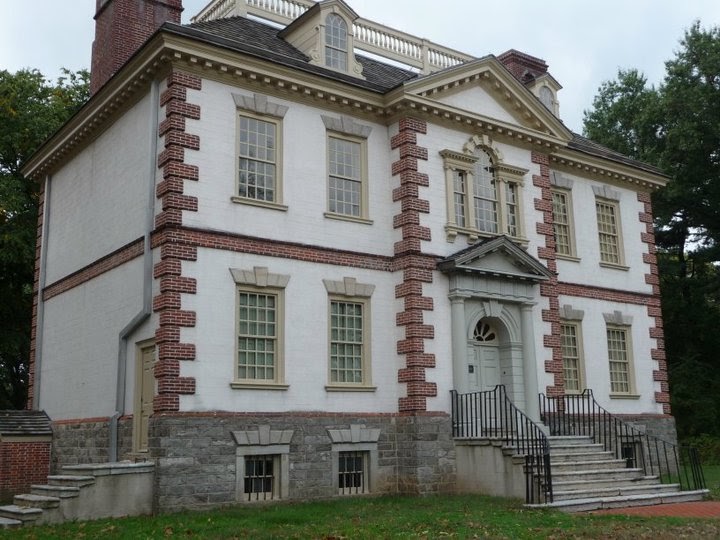
They call it Mount Pleasant, but to Joseph, it’s anything but pleasant. The stifling heat of the outbuildings, the occasional beatings, the hands rubbed raw from hours of scrubbing, none of it is in the way of pleasant. The whites call it the Grand Dame of the houses in the area, something about how pretty the house is, a mixture of Scottish and Georgian style, he overhears. But no Grand Dame harbors such wanton cruelty in her house. Surely not.
The people who hold the tours never talk about Joseph, hardly mention the slaves that live in this house. Joseph resents being ignored, forgotten. No one remembers them this far north of the Mason-Dixon Line. Oh, he’s heard the abolitionists, after his time, talk in these halls. He’s heard the modern folk talk idly about how terrible slavery was, before moving on to exhort the lovely architecture or the mysterious door that goes nowhere, set in the wall just for symmetry.
But when it gets dark and the tours are all done and the shutters have been secured against the night, Joseph makes sure the Grand Dame remembers her past. He waits until the uniformed people check the halls with flashlights at intervals; then he sends things crashing through the upstairs hallway, and he remembers the sound of a scream, a footstep, a fallen pot of soup for which he is beaten.
The security guards refuse to face Joseph alone. They either neglect their duty to check the building at night, or they come in pairs, never venturing upstairs, even if they see a light on. They, at least, know the Grand Dame’s secrets. Joseph lives to make sure someone remembers. Joseph is of his time, and this time, and all times. Joseph is past, present, and future. Joseph is here, always.
Thursday, October 21, 2010
Social agoraphobia
In my shell, I lay silent, striving to make even my heartbeat faint. But I must come out sometimes. When I do, it’s claws first. My eyes blink rapidly in the sudden brightness, and my arms tremble. The world does not understand my kind. My world is filled with people chatting happily away, never knowing how much I need to hide away in my shell. When I see the funny guy across the way, my heart seizes up. My eyes dart this way and that, searching desperately for a way to change my route so I don’t have to walk past him and laugh at his jokes.
When I finally get a glimpse of a life I think I want, it’s out of reach. I hate myself for making it so impossible to attain. The first step would be easy, invited even. But I think ahead; the next ten million steps would be torturous and unsafe. The people around me are all crabs. But I have invested so much in them. Can I really crawl out of this shell? Self-doubt consumes me. I don't know what I want.
I draw deep within my shell. I have to think about this.
Thursday, September 30, 2010
The grape
There was a pleasant, chilly bite in the October breeze, sharply contrasted with the warmth of the citrine late-afternoon sun. It hadn’t rained in more than a week; the grass was brittle and crispy beneath my shoes. I held a grape in my hand. The iris sphere was dusty with pesticide and slightly wrinkled from being clutched like a talisman as I ambled through the vineyard. It was fat and squashed. I regretted finding it after its prime. This one perfect grape had been missed in the harvest, seemingly alone.
I imagined putting it in my mouth; I would burst the tender skin with my teeth, allow the juice to spill over my tongue, not chewing until I felt I might drown. It would be slightly bitter, and the taste would remind me of my grandmother’s cooking. I would dream that night of her, tell her about the grape, and wake in the morning convinced I had spoken to her actual spirit. I would tell no one, but fervently search for the next encounter. I would fail to keep appointments in favor of traveling from one distant restaurant or farm to another, trying to find foods that tasted like hers. I would lose my job and eventually my friends, having succumbed to obsession in finding taste memories to prompt spirit dreams. I would eat through my savings; I would be reduced to begging on the streets and hoping for a sign of her in soup lines.
I buried the grape in the dusty soil at the base of the barn. My fingernails bore a faint purple stain, the only evidence of my barely escaped future. Something so powerful and dangerous should never be eaten.
Tuesday, September 7, 2010
Love story
You curled your tail around her legs and ensnared her. You entwined the threads of your life around her, tied them to her. Your heart rejoiced with the knowledge that you had caught her, made her yours. Her edges met yours like the continents of Pangæa coming together for the first time in two hundred and fifty million years. Your world sang with rightness.
As time passed, though, you discovered her edges to be sharp. Her blunt nature became less engaging, more difficult to tolerate. She demanded too much respect, too much correctness. Her mood swings were baffling and unpredictable. Her silence seethed; her jokes fell flat. She held you back socially with her shyness and craziness. You feared she looked down on you because she was smart, ambitious, obsessive. You longed to rip off her butterfly wings and watch her scream in agony. You ached to carve the steel from her eyes.
Quietly at first, then with increasing rage, you began to cut the threads. You had forgotten why you were here. Your guttural yell shredded your throat as you pushed her off the cliff. You stood with your hands on your hips, your lips pursed grimly, and watched with satisfaction as she fell and fell and fell.
Friday, August 6, 2010
Things to do at a concert
I grinned and elbowed a girl who was jumping up and down and throwing out her hands. She happily pushed me back. My face smeared across a slick shoulder; both were so covered in sweat, I immediately slid off. I lost my balance and teetered dangerously, but there were too many bodies between me and the floor for me to actually reach it. The owner of the wet shoulder grabbed my arm and righted me. He grinned. He was missing a canine. His septum piercing glinted in the indirect red-and-blue stage lights.
He was bulky and nearly a head taller than most of the others around. I gestured, pointing to the ceiling. “You mind?” I had to scream into his ear to be heard over the Celtic punk music, which was so loud the wooden floors vibrated.
He looked at me appraisingly. Probably guessing how much I weighed. “All right,” he shouted. “Come on.” He tapped the shoulder of another big guy and pointed at me, then pointed at the ceiling.
I checked my hair. It was lopsided and straggling out of its bun, but not yet completely loose. My newfound friend cupped his hands and I stepped as gently as I could into them. The other guy steadied me by grabbing my thigh.
“One…” he counted, hoisting me and lowering me instantly. “Two… Three!”
With a huge heave, I was flung over the crowd by one foot. People’s heads slammed into my ribcage. With one hand, I held my pants pocket, which contained a wad of cash and my cell phone. With the other, I reached out to try to spread my weight across other people.
Soon people realized there was a crowd surfer nearby. They threw up their hands and grabbed whatever part of me that threatened to crack their skulls. I did my part; I kept my feet elevated so I didn’t smack someone in the face with my shoes. My body heaved in time with the music, held up by a dozen people.
I surged forward and tipped over the front, just before the stage. A beefy security guard caught me and lowered me to the ground. Here, the music was a solid thing; it pushed me back. The security guard pointed me in the direction he wanted me to go. I looked up at the bass player, whose foot was near my head, and smiled. I turned and jogged back to fight my way back through the crowd and do it all over again. From my chest bubbled a strange noise, a hysterical screaming laugh from the thrill of a great show.
He was bulky and nearly a head taller than most of the others around. I gestured, pointing to the ceiling. “You mind?” I had to scream into his ear to be heard over the Celtic punk music, which was so loud the wooden floors vibrated.
He looked at me appraisingly. Probably guessing how much I weighed. “All right,” he shouted. “Come on.” He tapped the shoulder of another big guy and pointed at me, then pointed at the ceiling.
I checked my hair. It was lopsided and straggling out of its bun, but not yet completely loose. My newfound friend cupped his hands and I stepped as gently as I could into them. The other guy steadied me by grabbing my thigh.
“One…” he counted, hoisting me and lowering me instantly. “Two… Three!”
With a huge heave, I was flung over the crowd by one foot. People’s heads slammed into my ribcage. With one hand, I held my pants pocket, which contained a wad of cash and my cell phone. With the other, I reached out to try to spread my weight across other people.
Soon people realized there was a crowd surfer nearby. They threw up their hands and grabbed whatever part of me that threatened to crack their skulls. I did my part; I kept my feet elevated so I didn’t smack someone in the face with my shoes. My body heaved in time with the music, held up by a dozen people.
I surged forward and tipped over the front, just before the stage. A beefy security guard caught me and lowered me to the ground. Here, the music was a solid thing; it pushed me back. The security guard pointed me in the direction he wanted me to go. I looked up at the bass player, whose foot was near my head, and smiled. I turned and jogged back to fight my way back through the crowd and do it all over again. From my chest bubbled a strange noise, a hysterical screaming laugh from the thrill of a great show.
Subscribe to:
Posts (Atom)